Do you think Artificial Intelligence (AI) representations of real people (aka “deepfake”) have a place in business communications, external or internal?
Before you answer that, I’ve got three hypothetical scenarios for you to consider –
Scenario one: internal business-wide updates
In this scenario, we’ve created deepfakes of your senior leaders (perhaps the CEO or the CMO) sharing internal business-wide updates. There’s a risk that might damage trust with your employees, right?
But what if this was a global business, that deepfake was clearly signposted as “AI Generated”, and existed alongside a real life recording of that leader sharing that same message. Turns out the purpose of the deepfake is to give colleagues the option of watching the leadership update in their local language. Does your opinion change then?
Scenario two: internal training videos
In our second scenario, we’ve created deepfakes of your employees to provide internal training videos. Similar to scenario one, these videos are clearly signposted as “AI Generated” – however, they don’t exist alongside a real life recording. That’s because we’ve saved time and budget on high-production filming and editing to create these videos, getting essential training information in front of employees more quickly.
Would this damage trust with your employees? Would they view the training more or less seriously compared to a real life recording?
Scenario three: external updates
In our final scenario, we’re creating a deepfake of one of your senior leaders (perhaps the CEO or the CMO) communicating an update shared externally. The video will be clearly signposted as “AI Generated” and hosted on the brand or corporate website.
We’ve done this because the leader is unavailable to film in real life (maybe they’re sick, prioritising time with family, or not near to a suitable location for filming) and there’s a deadline that can’t be moved, but they are able to approve the deepfake version before it’s shared externally.
Would the message being shared change your opinion of whether or not to do this? Could this damage trust with your consumers or investors?
What to ask before considering a deepfake
These are just three hypothetical scenarios of how we might choose to use deepfakes in business communications – though the choice to use a deepfake will not be right for every business, every leader, every industry, every scenario.
Additionally, there’s the cyber security risk that the images used to train the model could be leaked or hacked, and unauthorised deepfakes are created. (Though I suspect this could be a risk with any existing imagery of people, if a bad actor chose to use it maliciously…)
The reality is that this type of solution is available today, right now, and how we use it is something that must be considered so we can make informed decisions that will shape the future of AI use and our industry.
So, I’ll leave you with a list of (non-exhaustive) questions that I ask when considering use of a deepfake:
- How does the person being faked feel about their likeness being used in this way? For example, are they comfortable, excited, nervous, concerned?
- How will the target audience feel about the use of a deepfake in this scenario? Is there a risk of damage to trust or reputation? What would we need to do to protect trust in this context?
- How about with wider audiences if this is shared out of context – is there a risk of damaging reputation? For example, if this was shared without context to a major news outlet, what would their headline be? What would we need to do to protect business reputation in this context?
- What are the T&Cs of the tool I’m using? How safe and secure is the hosting for the information that I’m inputting? For example, is it enterprise secure or is there a risk of inputs being used in other ways?
- Does the messaging or context change how comfortable and confident you feel with a decision to use a deepfake? What needs to be done to be comfortable and confident with the use of a deepfake in this scenario?
Tell me, would you consider using deepfakes in your business communications material? What other questions would you ask before commencing?
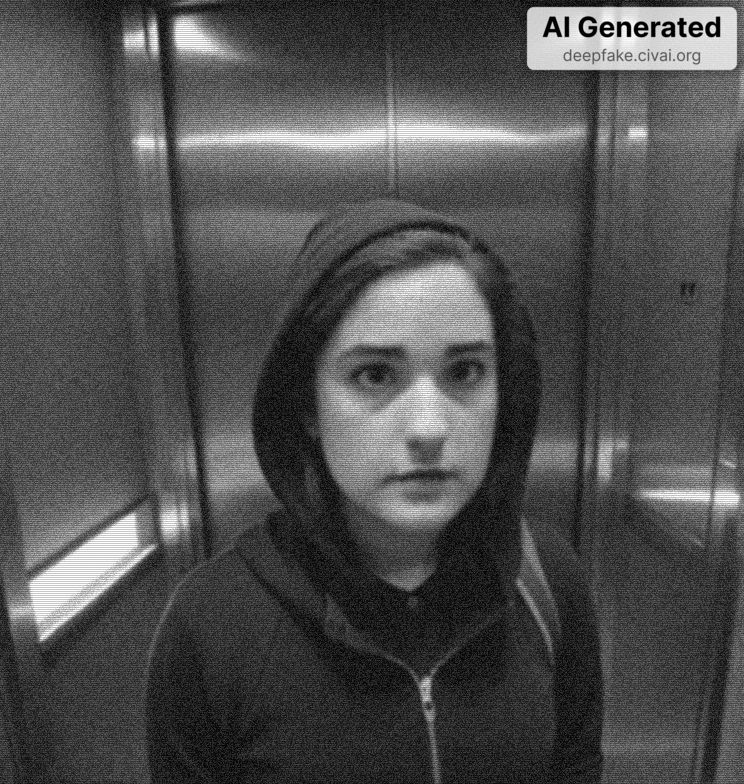
Try the Deepfake Sandbox yourself here to see how easy it is: https://lnkd.in/epWskaPV



 Call me Katie