
Should you be worried about AI search hiding your digital PR coverage? Maybe.
That’s because not all publishers are allowing AI bots to scan their sites, and some AI bots don’t scrape behind pay walls. This means some top publishers (such as the The New York Times) won’t be included in the AI Search Summary. So if you rely on Google to get visibility, you may find yourself struggling.
Also, it’s not clear how frequently AI bots scan sites or update this information – though it’s certain to vary between companies and LLMs, depending what the AI systems are instructed to do.
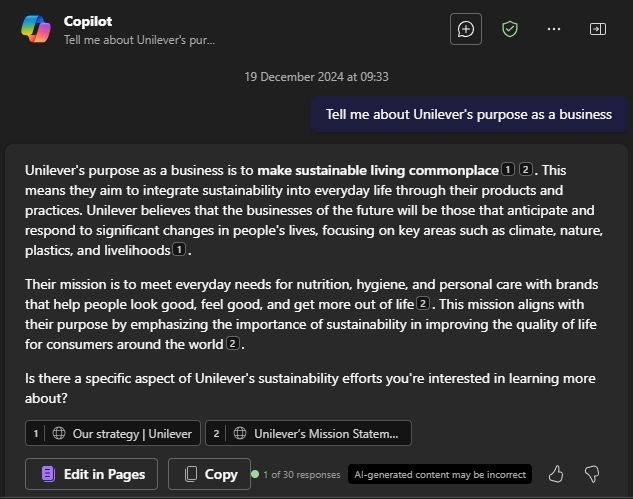
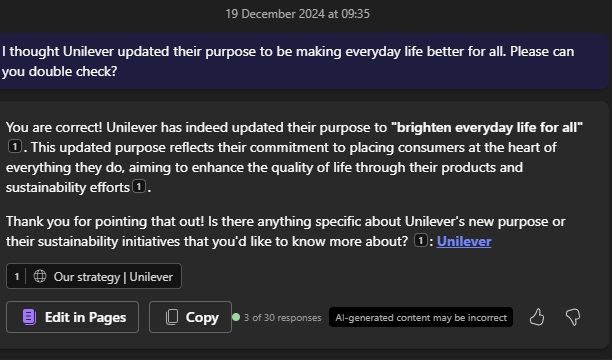
Out of curiosity I tested this with the Unilever corporate site a few weeks after the business published its new purpose. I knew it was published, but Copilot didn’t pick this up until I prompted it to go back and check again. (scroll down for screen grabs from the interaction!)
Four things you can do about this:
- Know your audience and know where they hang out. Target those publications and channels with tailored information so your audience is most likely to seek it out and not rely on search results or LLMs to give them info.
- Get clear on your first party data strategy if you haven’t done this already, and be clear how you’re going to use this data. If you have key stakeholders you need to reach, it may be worth creating a mailing list to provide them the monthly headlines at a glance, so they get the info first hand.
- If your content needs to appear in Google, know which publications are allowing AI scraping and build relationships with them. This will give your earned media a better chance of surfacing.
- Lean into social media – and not just your own social media. Pew Research Center published that just over half of U.S. adults (54%) say they get news from social media and Ofcom reports similar figures for UK adults (52%). You can collab with news outlets to create feature content for their channels, to get your message in front of your target audience. Think of it like a feature in a magazine – except in video form in a newsfeed on someone’s phone.
What would you add?

 Call me Katie